
Treatment of Insects and Diseases
Thuya leafminer
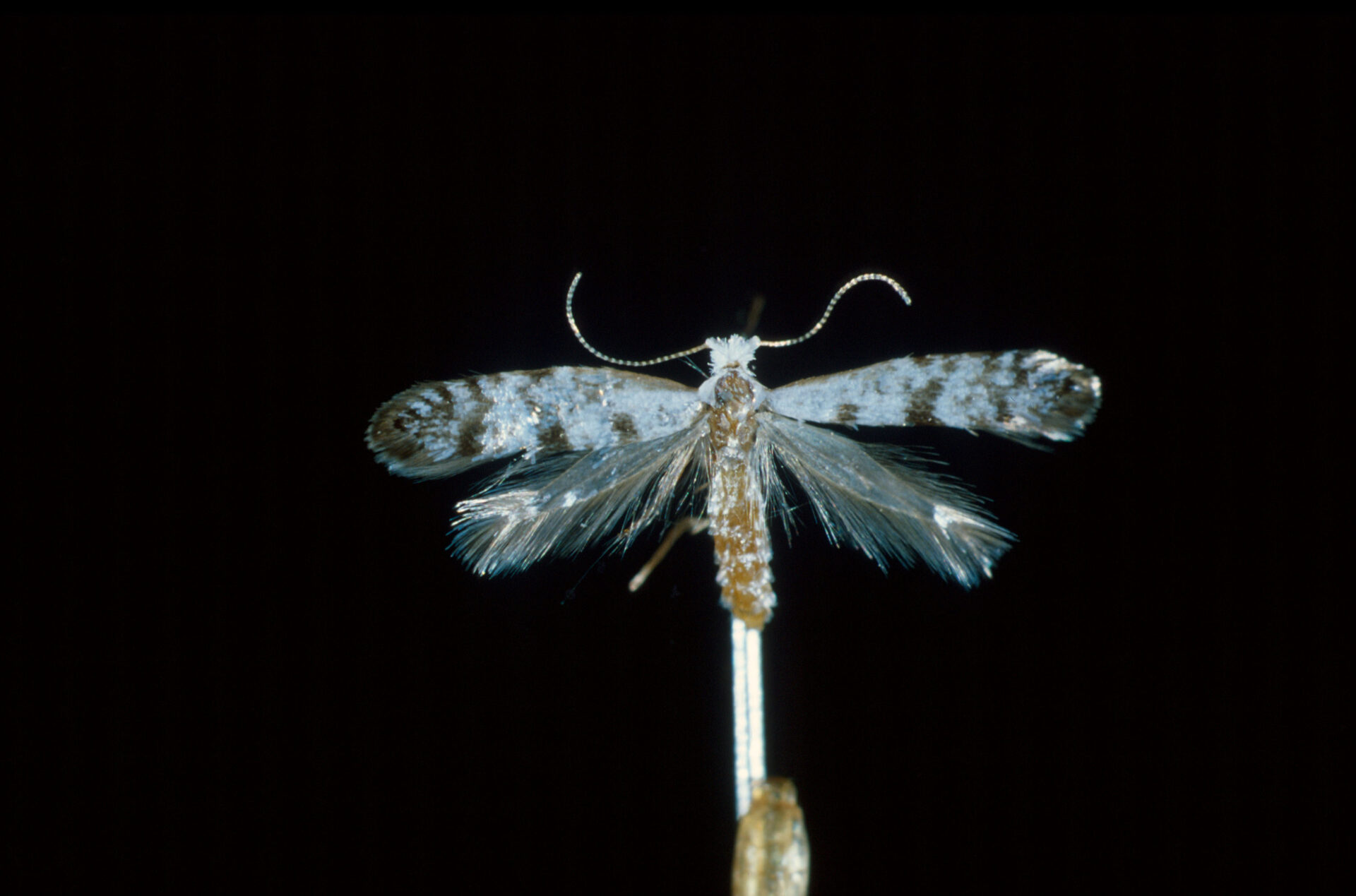
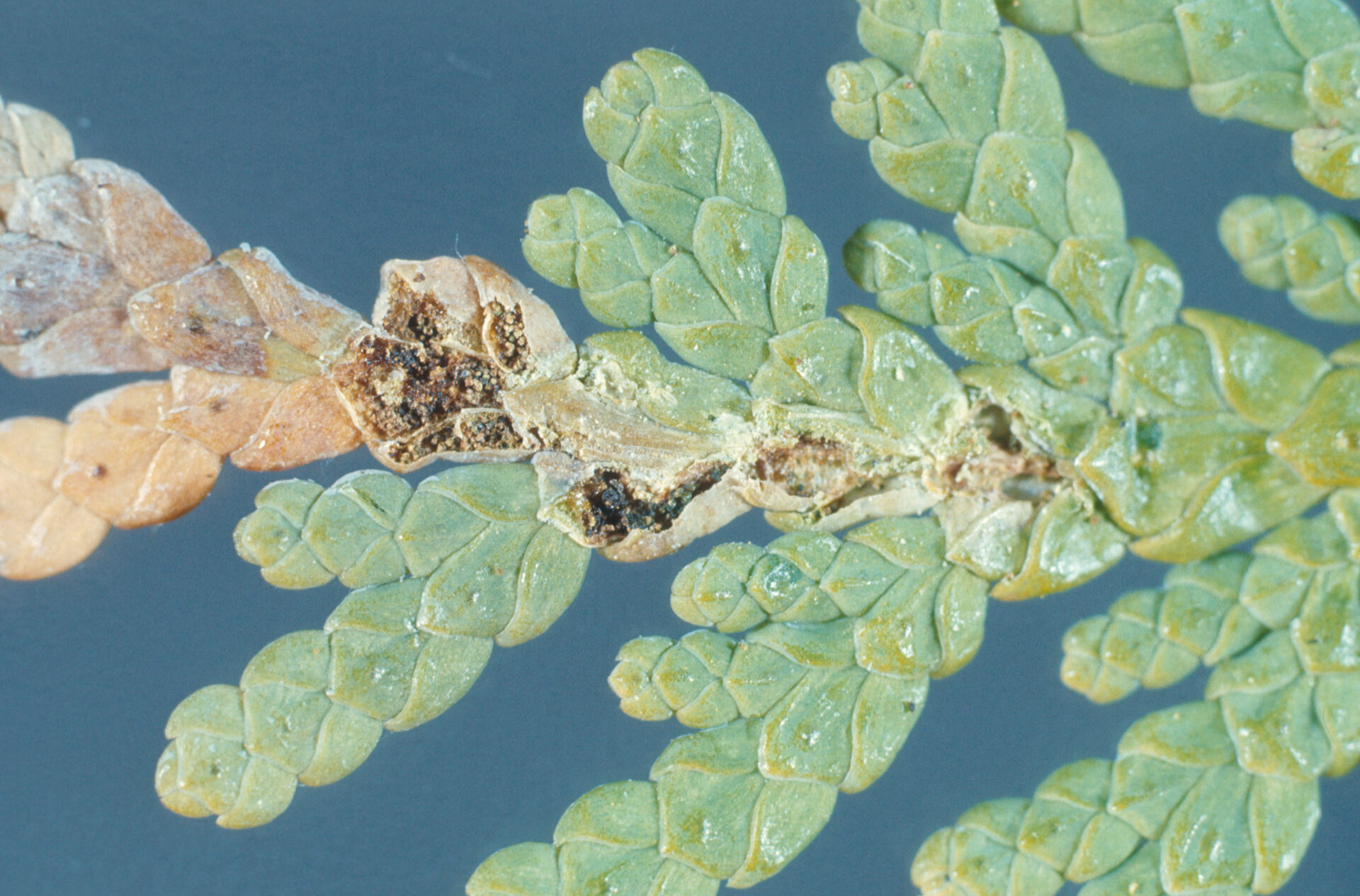
The cedar leaf miner (Argyresthia thuiella) is a small butterfly whose larvae feed on cedar leaves, causing considerable damage, particularly in ornamental cedars in urban gardens and nurseries.
Life Cycle
- 1. Egg: Adult females lay their eggs on cedar leaves in late spring or early summer.
- 2. Larva: The hatching larvae penetrate the leaves and burrow into them, where they consume the internal tissues. This phase is the most harmful for trees.
- 3. Nymph: The larvae pupate either inside the leaf galleries or in the soil after falling to the ground.
- 4. Adult Butterfly: The cycle ends with the emergence of adult butterflies from the nymphs, ready to mate and lay new eggs.
Symptoms and Damage
- ● Browning Leaves: Infested leaves turn brown and die, giving the tree an unpleasant appearance.
- ● Loss of foliage: In cases of severe infestations, the tree can lose a large quantity of its foliage.
- ● Slows Growth: Severe infestations can slow the growth of young trees and reduce their vigor.
Management and Control
- ● Pruning: Inspect trees regularly and cut back infested branches to reduce the larvae population.
- ● Proper Care: Keep trees healthy with adequate watering, appropriate fertilization and good mulching to enhance their resistance to pests.
- ● Biological control: Natural predators and parasites, such as certain species of wasps, ladybugs and praying mantises can help control cedar leafminer populations.
- ● Pesticides: Insecticides can be used to control severe infestations, but they should be applied as a last resort and in accordance with local regulations.
By maintaining careful monitoring and applying appropriate management techniques, damage caused by cedar leaf miner can be minimized.
Emerald Ash Borer
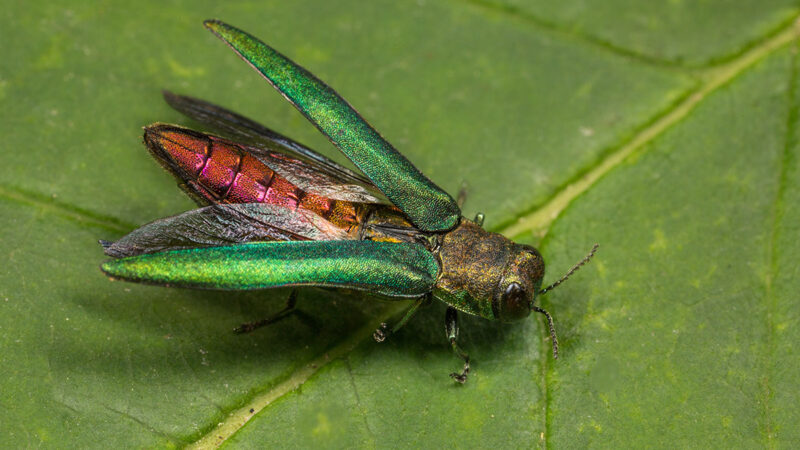
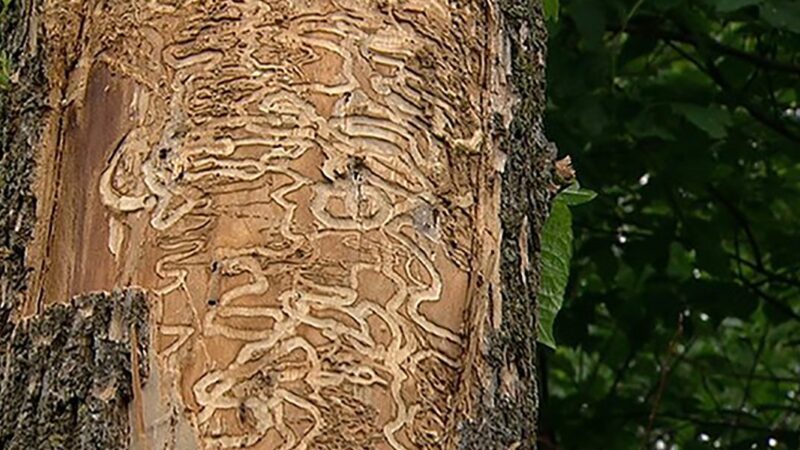
Emerald ash borer (Agrilus planipennis), also known as emerald borer ash beetle, is an invasive beetle native to East Asia. He poses a threat seriously to ash trees in North America and Europe.
Identification
- ● Appearance: The adult emerald ash borer measures between 8 and 14 mm long and has a vibrant metallic green color, hence its nickname emerald borer.
- ● Larvae: The larvae are whitish in color, elongated and segmented. They dig S-shaped galleries under the bark of ash trees.
Life Cycle
- 1. Eggs: Females lay their eggs in cracks in the bark of ash trees.
- 2. Larvae: After hatching, the larvae penetrate under the bark and feed on the cambium, thereby disrupting the transport of nutrients and water in the tree.
- 3. Nymph: The larvae pupate under the bark before emerging as adults in spring.
- 4. Adults: Adults emerge from infested trees, usually in May or June, and the cycle begins again.
Symptoms and Damage
- ● Sparse Canopy: Tree tops begin to thin out as branches die back.
- ● Dead branches: Affected branches die, leading to loss of foliage.
- ● Bark Peeling: The bark may peel off, revealing S-shaped galleries dug by the larvae.
- ● Stump Suckers: The tree produces new shoots near the base of the trunk in response to stress.
Management and Control
- ● Monitoring: Inspect ash trees regularly for signs of infestation.
- ● Vaccine: An insecticide injected into the trunk at the bottom of the tree will rise into the xylem vessels in order to destroy the insect throughout the plant (this is preventive and not curative).
- ● Biological Control: Introduce natural enemies of the borer, such as certain species of parasitoid wasps, to help regulate populations.
- ● Felling and grubbing: Remove and destroy infested trees to prevent spread.
The emerald ash borer represents a significant threat to ash trees and can cause extensive damage if left unchecked. Vigilance and management measures Proper practices are essential to protect these precious trees.
Spruce Budworm
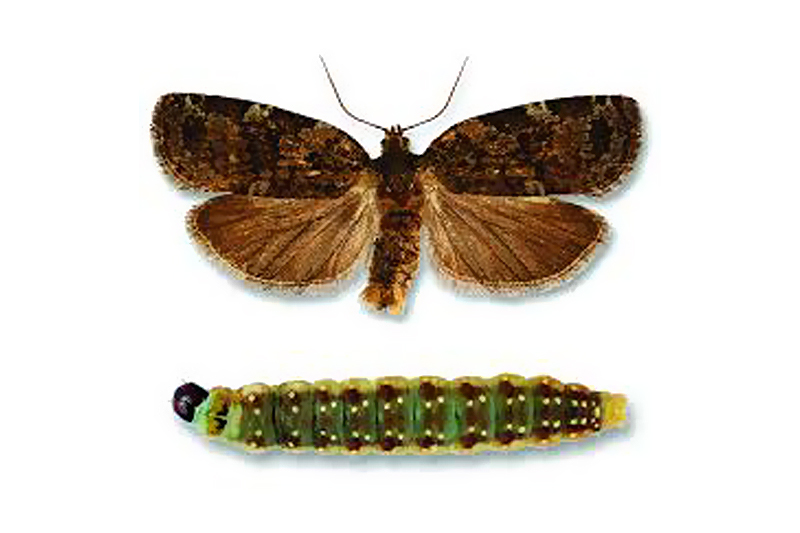
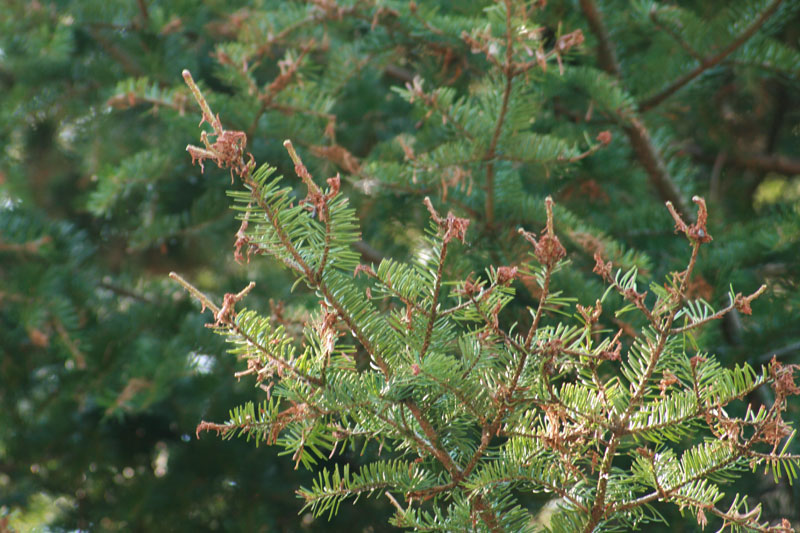
The spruce budworm (Choristoneura fumiferana) is a moth of night native to North America. It is considered one of the most serious pests more destructive to coniferous stands, particularly spruce and fir trees.
Identification and Symptoms
- ● Appearance of Caterpillars: Spruce budworm caterpillars are generally green with darker longitudinal stripes.
- ● Damage to Foliage: Caterpillars feed on buds, new shoots and needles, causing significant defoliation. Affected trees may exhibit yellowing and dying foliage.
- ● Hibernation: Caterpillars spend the winter in silk cocoons located in bark crevices or buds.
Transmission Mode
Caterpillars emerge in spring and disperse to find new sprouts to devour. They can move long distances using wires of silk that they weave.
Management and Control
- ● Monitoring: Inspect trees regularly to detect early signs of infestation.
- ● Pruning: Prune and remove infested branches to limit spread.
- ● Biological control: Use natural enemies like parasitoid wasps to reduce the budworm population.
- ● Pesticides: As a last resort, the application of pesticides may be necessary, but this should be done carefully to minimize the impact on the environment.
The spruce budworm can cause considerable damage to forests, particularly during epidemic periods. Proactive management and Continuous monitoring is essential to protect forest ecosystems.
Dutch Elm Disease
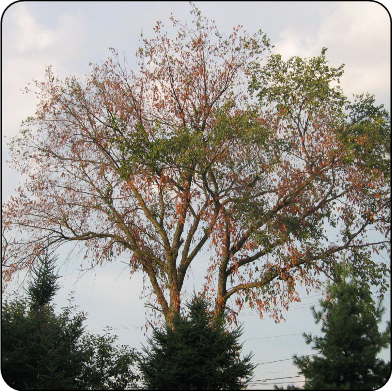
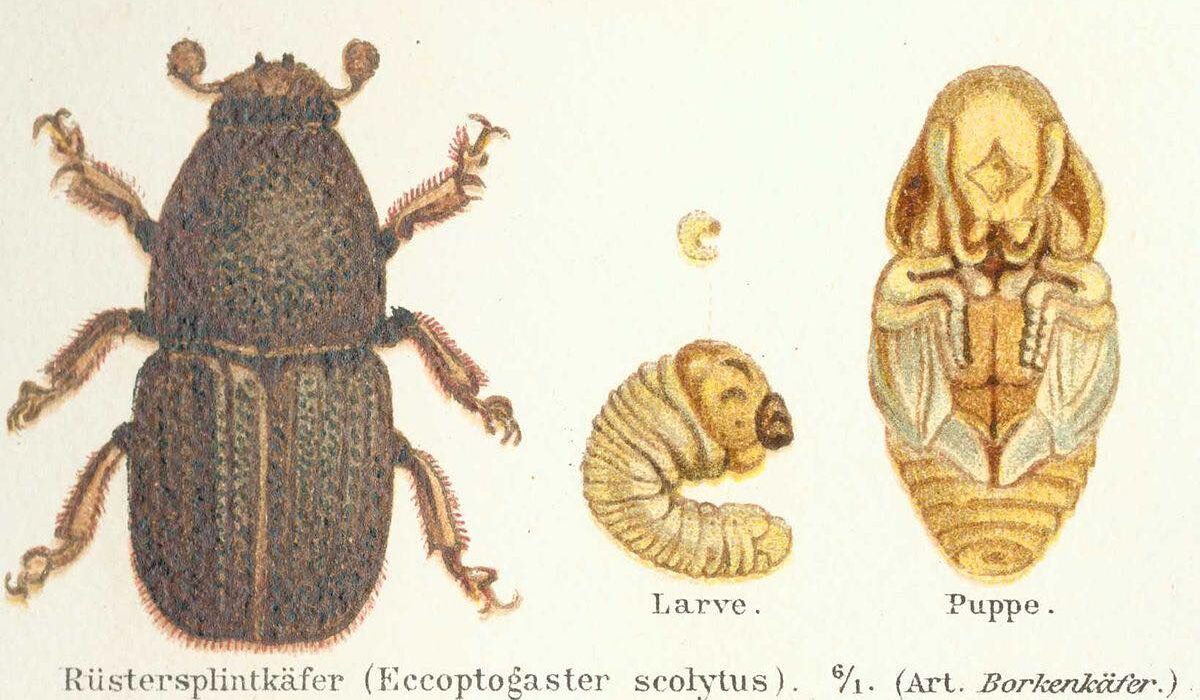
Dutch elm disease (Ophiostoma ulmi and Ophiostoma novo-ulmi) is a devastating fungal infection that has caused the death of millions of elm trees across the world. The name of this disease comes from pioneering research carried out in Netherlands in the 1920s to understand the infection.
Identification and Spread
- ● Pathogenic Fungi: The disease is caused by fungi of the genus Ophiostoma. These fungi obstruct the sap-conducting vessels of the tree, preventing the flow of nutrients and water.
- ● Vectors: Bark beetles (beetles) of the genus Scolytus, notably Scolytus multistriatus, play a key role in the spread of the disease by carrying the spores of the fungus from one tree to another.
- ● Transmission: Fungal spores also spread via the intertwined roots of different trees, allowing the infection to spread even without intervention from bark beetles.
Symptoms
- ● Yellowing Leaves: Early signs of infection include yellowing of leaves, usually at the top of the tree.
- ● Branch Death: Infected branches begin to die, often starting at the crown and working downward.
- ● Mold: Under the bark of infected trees, brown or grayish streaks may appear, indicating the presence of the fungus.
Management and Control
- ● Monitoring and Diagnosis: Inspect elm trees regularly for early signs of disease and perform tests to confirm the presence of fungi.
- ● Insecticides and Fungicides: Use insecticides to reduce bark beetle populations and systemic fungicides to protect uninfected trees.
- ● Root management: Employ physical or chemical barriers to prevent disease transmission through intertwined roots.
- ● Pruning and removal: Prune infected branches at the first sign of infection. In severe cases, the entire tree may need to be cut down and destroyed to prevent spread.
Dutch elm disease has had a major impact on elm populations in many parts of the world. Vigilance and proactive management are essential to protect these majestic trees against this devastating infection.
Cytospora Canker
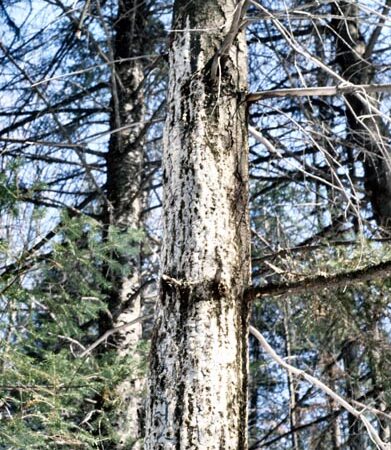
Cytospora canker is a fungal disease that affects many types trees, including poplars, willows, fruit trees and conifers. This disease is caused by fungi of the genus Cytospora, such as Cytospora chrysosperma and Cytospora kunzei.
Identification and Symptoms
- ● Appearance of Cankers: Cankers appear as sunken, discolored, and often oozing areas on the trunk, branches, and base of the crown. They can be dark brown or black in color.
- ● Resin Oozing: Cankers often produce resin or white gummy exudates, especially visible in conifers.
- ● Branch dieback: Affected branches show signs of dieback, with leaves turning yellow, wilting and falling prematurely.
- ● Fruiting Body Formation: Fungal fruiting bodies in the form of small black pustules often appear on cankers, releasing spores when ripe.
Transmission Mode
The fungus is mainly spread by spores which are spread by the wind, rain and insects. The spores enter the tree through wounds or cracks in the bark, caused by environmental conditions unfavorable conditions, mechanical damage or insects.
Management and Control
- ● Monitoring: Inspect trees regularly for early signs of infection.
- ● Pruning: Prune and remove infected branches to reduce the spread of spores. Disinfect cutting tools between uses to avoid cross-contamination.
- ● Crop Care: Keep trees healthy with adequate watering, proper fertilization, and proper soil management to reduce tree stress.
- ● Debris Removal: Remove and destroy bark debris and fallen branches to reduce sources of fungal spores.
- ● Fungicides: Application of copper fungicides can help protect uninfected trees, but should be used in addition to appropriate cultural practices.
Cytospora canker can have a devastating impact on trees if not controlled managed correctly. Vigilance, combined with proactive management, is essential to protect trees from this fungal disease.
Black Knot
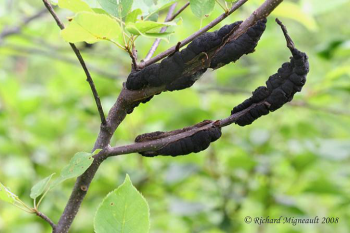
Black knot, also known as black canker, is a fungal disease caused by the fungus Apiosporina morbosa (synonym: Dibotryon morbosum). This disease mainly affects fruit trees of the Prunus genus, such as plum and cherry trees and can cause their death.
Identification and Symptoms
- ● Appearance of Nodules: Black nodules are fleshy, black growths that appear on the branches and trunks of infected trees. They can reach several centimeters in length and have a rough surface.
- ● Branch dieback: Affected branches show signs of dieback, with leaves turning yellow, wilting and falling prematurely.
- ● White mold: In humid periods, white mold can develop on the nodules.
Transmission Mode
The fungus is spread mainly by spores released from black nodules. These spores are carried by wind, rain and insects. The spores enter the tree through wounds or cracks in the bark.
Management and Control
- ● Monitoring and prevention: Inspect trees regularly to detect early signs of infection. Eliminate native species carrying nodules such as the Pennsylvania cherry for example. Avoid injury.
- ● Pruning: Prune and remove infected branches to reduce the spread of spores. Disinfect cutting tools between uses to avoid cross-contamination.
- ● Crop Care: Keep trees healthy with adequate watering, proper fertilization and soil management to reduce tree stress.
- ● Debris Removal: Remove and destroy bark debris and fallen branches to reduce sources of fungal spores.
- ● Fungicides: Application of systemic fungicides at bud opening can help protect uninfected trees, but should be used in addition to appropriate cultural practices.
Black knot can have a significant impact on fruit trees if left unmanaged correctly. Careful monitoring and proactive management are essential to protect trees from this fungal disease.
Tar Spots of Foliage
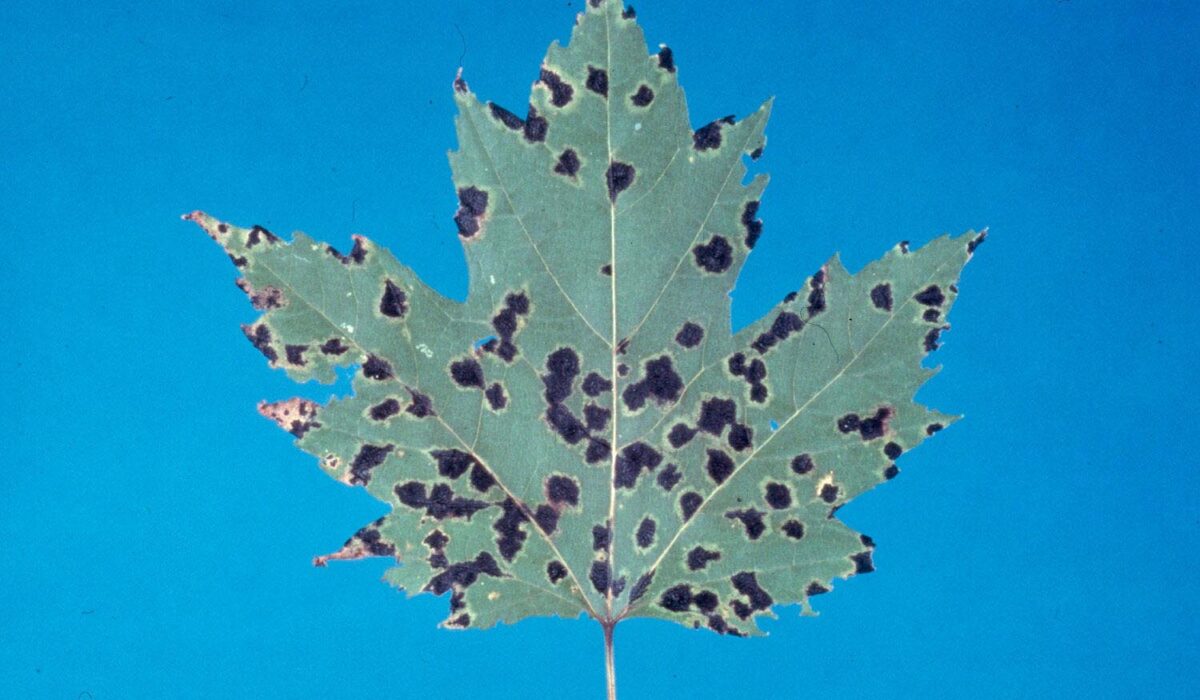
Tar spots of foliage, also known as leaf spot maple tarry, are caused by fungi of the genus Rhytisma, mainly Rhytisma acerinum and Rhytisma americanum. This disease affects mainly maples, notably the Norwegian maple, the sugar maple, the red maple and silver maple.
Identification and Symptoms
- ● Appearance of Spots: Tar spots are black, shiny, raised growths that appear on the upper surface of infected leaves. They can measure up to 3 cm in diameter.
- ● Leaf dieback: Affected leaves may turn yellow, wilt and drop prematurely.
- ● White mold: In humid periods, white mold can develop on stains.
Transmission Mode
The fungus is spread primarily by spores released from spots tarry. These spores are carried by wind, rain and insects. THE spores enter the tree through wounds or cracks in the bark.
Management and Control
- ● Monitoring: Inspect trees regularly for early signs of infection.
- ● Pruning: Prune and remove infected branches to reduce the spread of spores. Disinfect cutting tools between uses to avoid cross-contamination.
- ● Crop Care: Keep trees healthy with adequate watering, proper fertilization and soil management to reduce tree stress.
- ● Debris Removal: Remove and destroy fallen leaves to reduce sources of fungal spores.
- ● Fungicides: Application of fungicides can help protect uninfected trees, but should be used in addition to appropriate cultural practices.
Although this disease can affect the aesthetics of trees, it generally does not no major impact on their long-term health. Careful monitoring and proactive management are essential to protect trees from this disease fungal.
Other insects and diseases
There are many insects and diseases that can endanger the health of plants in Quebec. Although those listed above are the most common, others may arise as well. Here are other insect pests that are present in Quebec:
Shredders-Defoliators;
Tent caterpillars, willow leaf beetle, maple leafroller, American tent caterpillar, sawfly (Sawfly), gypsy moth and skeleton fly.
Piercers;
Emerald birch borer, white pine weevil, willow weevil, longhorned beetle black, Asian long-horned beetle, brown long-horned beetle, maple borer and bark beetles.
Biting-sucking insects;
Mealybugs/kermes lecaniae, phytoptes and aphids.
Here are other mushrooms found in Quebec that can cause dieback or even death of plants: Anthracnose; carpophores; THE eutypellean, hypoxylonian, scleroderrian and nectrian cankers; the screening of foliage, verticillium wilt, beech bark disease, round disease, red oak ink disease, agaric root rot, rust and stegonosporium.
Identification and symptoms, modes of transmission as well as management and control of these insects and diseases are similar to those discussed above.
Other attacks exist concerning plants, notably burns. bacteria or damage caused by animals. But more Abiotic damage can harm the health of a tree. Here are some examples: Bad pruning; crown dieback; ice; breakage by machinery; frostbite, sunstroke; frost/other weather problems; the salts of ice breaking and cut wounds.
The best way to preserve the health of your plants remains consultation with professionals in the field. Call us if you have any doubts and our professionals qualified professionals will diagnose and subsequently intervene to provide you with treatment preventive and/or curative. The service we offer is “turnkey”!